


XRA Survey Shows Growing Role of XR in Workforce Development


Immersive technology is increasingly important in manufacturing as decision-makers consider and adopt extended reality (XR) across the industry, from workforce development to 3D modeling/prototyping, quality assurance, and more.
 To better understand how this technology is being integrated into and adopted by the manufacturing industry the XR Association (XRA) partnered with the RXN Group to survey 600 manufacturing CEOs and decision-makers across the country.
“Our intention with this survey was to take a comprehensive look into an industry that is exploring the use of immersive technology to address some of the same challenges we’re seeing across other fields including skills and employee shortages,” said Stephanie Montgomery, VP of research and development at the XR Association. “This isn’t a phenomenon isolated to the manufacturing industry, but a piece of the larger puzzle seeking to drive efficiencies in workflows. Our work paints a picture of decision-makers looking to XR’s immersive and interactive nature to bridge gaps in medical diagnosis, training, education and so much more.”
Seventy-seven percent of respondents expressed concern that the industry will face ongoing difficulties in attracting and retaining workers. The survey identified three main issue areas with workforce attraction and development: a skills shortage (68%), the loss of skilled retirees (34%), and the lack of effective job training programs (30%.)
Yet, over a third of manufacturing CEOs and decision-makers believe that XR technology can help address workforce skill gaps by significantly reducing barriers to skill acquisition, improving new hire training, helping with employee recruitment, improving employee training and education, and helping create new career advancement opportunities. This has led manufacturers to believe that XR technology can deliver a positive return on investment for their customers, with a majority of respondents believing that XR technology can be used to improve employee training, recruitment, and retention at a fraction of the cost of traditional methods.
“Transfr has revolutionized education with immersive technology, guiding learners to explore career paths and gain skills for a seamless transition to the workforce,” Bharani Rajakumar, CEO of Transfr, said. “They extend these solutions to enterprises, offering immersive experiences for employees to upskill confidently in risk-free virtual environments, enhancing performance. and job confidence.”
In addition to the benefits of using immersive technology in workplace development, over a third of all respondents believe that XR technology can be used throughout the manufacturing workstream to help improve quality control, design and prototype products, encourage remote collaboration, and improve customer engagement and sales.
“XR is proving to be an immensely powerful tool for increasing efficiency, safety and upskilling in the workplace,” concluded Elizabeth Hyman, CEO at XRA. “We’re working with our member companies, industry stakeholders and policymakers to create a responsible environment where this technology can thrive and support both employees’ and their industries’ growth.”
Overall, the report paints a confident picture of how XR can positively impact the manufacturing sector. Notably, 71% of manufacturing decision-makers reported that workers have been positively affected by the use of XR technology in their workplace, highlighting a clear optimism in manufacturing.
LEARN MORE
Luminous XR Launches No-Code XR Content Creation Tool
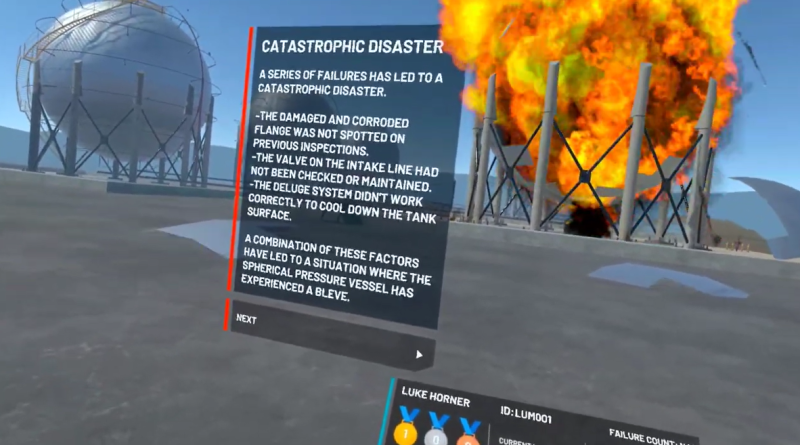
FLOW by Luminous XR provides creators with a way of creating VR/AR/MR, metaverse-style immersive training content without the need to code.
PICO Debuts Business Device Manager
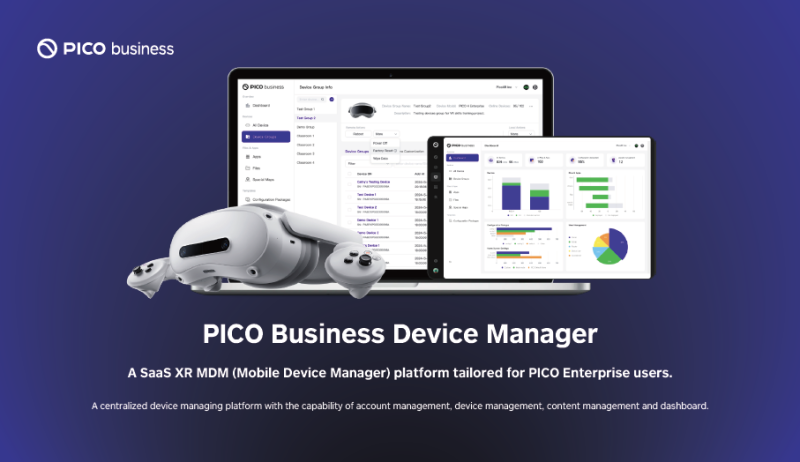
PICO has launched the PICO Business Device Manager, a SaaS XR Mobile Device Management platform designed specifically for enterprise users.
Mattercraft Brings Precise AR Positioning to the Web with Immersal
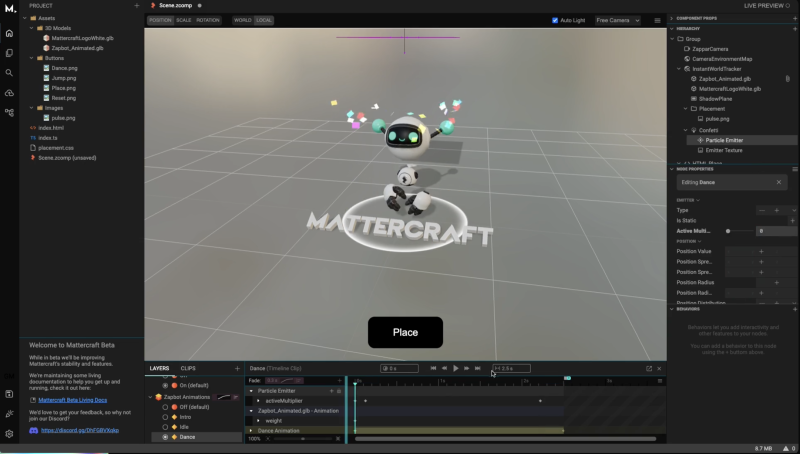
The Mattercraft and Immersal collaboration is designed to unlock a new era of location-based augmented reality experiences for mobile.
