


Exploring Blockchain’s Role in Consumer Technology

In an era dominated by cryptocurrency headlines, we often overlook the broader applications of blockchain technology. Yet, blockchain is quietly revolutionizing various consumer technology sectors with its potential to transform how we trade, work, and play. At CES 2024, one panel, titled “Blockchain’s Impact on Consumer Technology,” aimed to shed light on current real-world implementations while also highlighting what’s needed to make blockchain usage even more mainstream.

The panel featured experts from across the Web3 and blockchain ecosystem including Brittany Mier y Terán, Head of Business Development at Harpie, Ryan Yi from Coinbase Ventures, EY’s Blockchain CTO Arwin Holmes, and Dirk Lueth, CEO of Upland. Moderated by Sharon Weisman, CEO of PowerStation Studios, the discussion pivoted around blockchain’s core benefits for consumer technology, focusing on traceability, brand protection, and security.
Traceability, Transparency, and Authenticity
Traceability stands as a hallmark of blockchain’s utility. It’s vital in product supply chains, enabling consumers to access crucial data accompanying each product. Arwin Holmes from EY highlighted their work across sectors like pharmaceuticals, where regulatory compliance and quality checks necessitate impeccable traceability. Similarly, early implementations in the Italian wine industry demonstrated blockchain’s impact on luxury goods, enhancing their value with verifiable authenticity. “Traceability is really important, and that is one thing that blockchain brings to any product,” Holmes stated. “We need more transparency. We want to know where things are coming from, we want to know that they’re licensed authentically, and we want to know who has the rights and who gets paid,” Sharon Weisman of PowerStation Studios stated as she kicked off the panel.
Brand protection & Engagement
Blockchain’s ability to safeguard brand integrity and prove authorship, especially in the face of generative AI challenges and battles with “fake news,” was another key discussion point. EY’s project with Agenzia ANSA, a large news organization, exemplifies this. Blockchain technology enabled the public to verify the authenticity of news stories, adding a layer of trust and accountability to journalism.
“That serves the public good, offers some brand protection, and also builds a level of integrity and engagement with customers,” added Holmes.
Ryan Yi from Coinbase underscored the importance of understanding the core infrastructure and tools available for companies building blockchain applications, highlighting the diverse ecosystem of consumers, service providers, and regulatory bodies involved.
Security & Consumer Agency
A notable benefit of blockchain is the empowerment it offers consumers over their data. Yi stressed that blockchain enhances consumers’ control over their information, allowing them to better manage consent and selectively share their data on-chain. But blockchain also opens doors to new business models where consumers actively participate. “You can now have consumers as part of this journey in a way that they’re participating in your business model, not just somebody you’re collecting cash from,” Brittany Mier y Terán of Harpie remarked.
The panelists unanimously agreed that blockchain’s inherent transparency and immutability make it a secure platform for application development. “I do believe this allows us to build a future world that just works better,” added Holmes.
There was also a nod to the relationship between blockchain technology and AI, especially in the context of security. As blockchain applications become ubiquitous in consumer technology, the need for robust security frameworks becomes paramount. Panelists observed how the traditional consumer electronics industry has had 20+ years to work on security. Blockchain and Web3 founders and entrepreneurs should learn from those lessons and consider security from the very beginning when they are building a consumer experience. “They should be asking themselves questions like: How does my app make me, my company, and the consumers using this product vulnerable? What security tools and resources are available? You don’t want it to happen to you, but it really can, and it can also happen to your customers,” added Mier y Terán, who has a deep focus on security and a unique perspective on creating safer consumer experiences.
User Experience
The integration of user-friendly applications and robust security measures is crucial for blockchain’s adoption in consumer technology. Consumers are already using blockchain in everyday life, even if they don’t know it. For example, Starbucks loyalty program uses blockchain technology built by Polygon for its rewards, mobile payment, and ordering. Consumers using the Starbucks app are accessing a Web3 experience via their mobile app. Mier y Terán noted, “It should be pretty inherent, so you don’t have to ask what technologies are making it work.”
Yi added that the convergence of consumer tech and blockchain is leading to more intuitive user experiences and smoother blockchain interactions.
Dirk Lueth of Upland highlighted the huge societal impact that blockchain will have, especially when combined with AI and the Metaverse. “Generative AI is democratizing content creation. The next step uses blockchain to make the content into an NFT, and then consumers can use those assets in the metaverse,” he explained. “What’s compelling about blockchain is that it’s global, it’s 24/7 always on, and it allows us to establish some global standard for moving and managing value.”
The panel at CES 2024 made it abundantly clear that blockchain is not just a buzzword but a fundamental pillar of future consumer tech innovations. As Mier y Terán concluded, “If you’re a company that wants to be future-proofed, I highly recommend that you immerse yourself in the blockchain world in some way.” The message is clear – blockchain is set to be a key driver in the evolution of consumer technology.

Brittany Mier y Teran
About the Author: Brittany Mier y Terán is Head of Business Development for Harpie, the crypto security platform preventing hacks, scams, and theft. She specializes in enterprise grade blockchain security solutions, and is passionate about public goods projects that focus on onboarding the next generation to web3. Previously a leader in the consumer technology industry, she was recently listed as one of the 40 Under 40 and honored with the title “Woman to Watch” at CES 2022. Brittany is an avid ETHGlobal hackathon participant, competing alongside her two daughters, where they have won multiple bounties from Polygon, Lens, WalletConnect, Optimism, Chainlink and LivePeer.
LEARN MORE

AWE 2024 Marks Sony’s U.S. Debut of Spatial Content Creation System

Sony Electronics will publicly showcase its Spatial Content Creation System in the U.S. market at AWE 2024 in Long Beach, CA.

ET Insights on Blockchain Technology with Brittany Mier y Terán
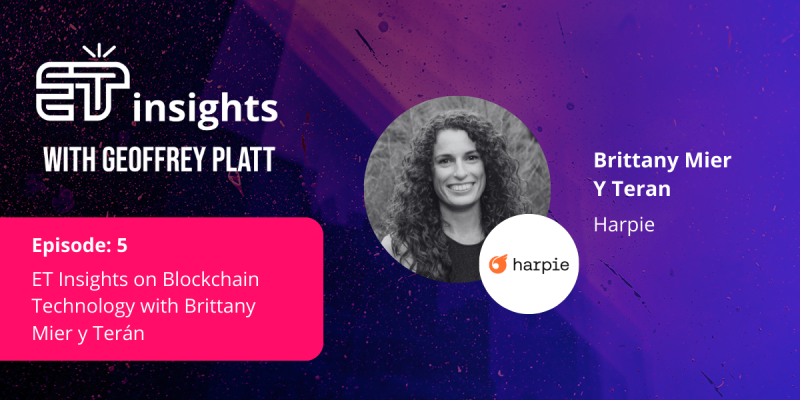
On this episode of ET Insights, Brittany Mier y Terán from Harpie sits down with Geoffrey Platt to discuss Blockchain Technology.
58% of Employers Believe AI and VR Will Be Job Creators
According to a report, a majority of employers are optimistic that emerging technologies won't eliminate workers, but will create more jobs.
