

Bringing Holograms to Life and the Future of 3D Imaging Technology

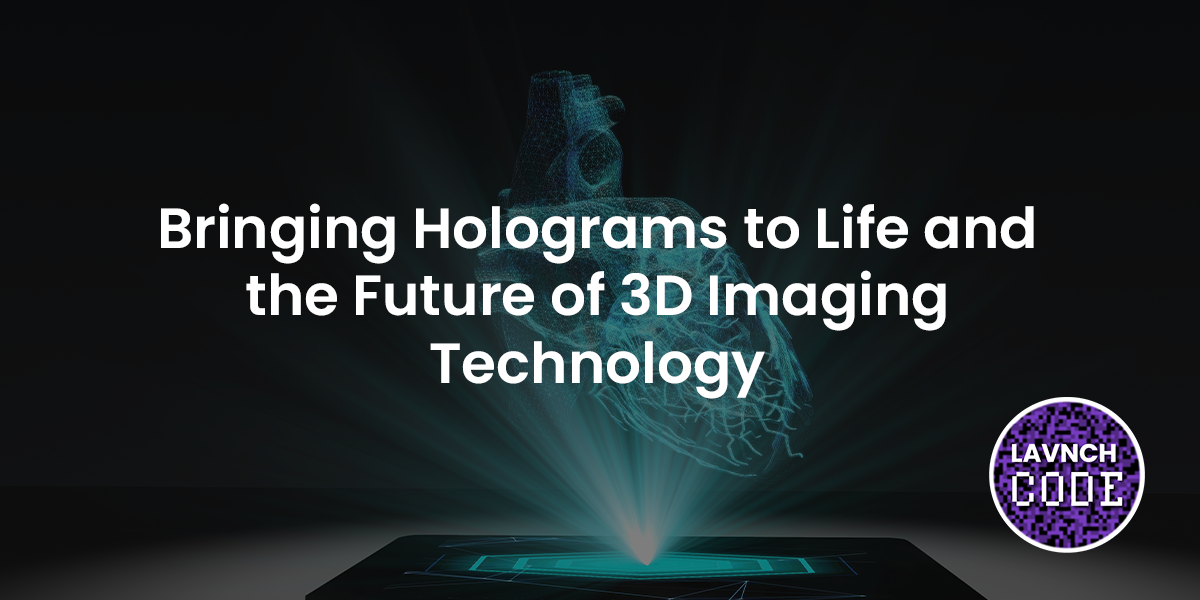
The idea of holograms has fascinated us for decades. Who would not want to see 3D images that seem like they are right in front of us? While we are not quite there yet, technology has made some incredible progress in bringing holograms to life.
Traditional holography uses lasers to record the way light waves interact with an object. It’s like taking a 3D photo, but, instead of just capturing the image, it captures the way the light behaves around it. This method has some limitations, like needing a special medium to record the hologram and being sensitive to changes in the environment.
Recently, scientists have been working on a new type of holography called digital holography. This method uses computers to create 3D images, rather than lasers. It is like creating a 3D model on a computer, but instead of just seeing it on a screen, it appears in mid-air.
One of the most exciting developments is the creation of light field displays. These displays can show a light field, which is like a 3D map of the light around an object. This allows us to see 3D images that seem like they’re really there, and we can move around them just like we would in real life.
Companies like Magic Leap are leading the charge in developing light field displays. They have created a special chip that can capture and display light fields, making it possible to see holographic-like images that seem incredibly realistic.
Another area of focus is the development of holographic displays that use lasers and special light modulators. These modulators can change the way light behaves, allowing us to create complex patterns and shapes. Companies like Red are working on this technology, and it has the potential to revolutionize the way we enjoy entertainment.
Recently India has also been experimenting with holographic technology, using it to create impressive displays of historical figures and leaders. In 2022, a hologram of Netaji Subhas Chandra Bose was projected at the Indian Parliament, allowing lawmakers to pay their respects to the freedom fighter.
Watch the video below to see PM Modi unveil Netaji Subhas Chandra Bose’s hologram statue.
More recently, Indian politicians have used holographic technology to campaign for elections, with some even using it to project themselves as holograms to rally supporters. These innovative uses of holographic technology are a testament to its potential to captivate and inspire audiences.
In addition to display technology, scientists are also making progress in capturing 3D information about objects and scenes. This is like taking a 3D photo, but instead of just capturing the image, it captures the way the light behaves around it. Companies like Microsoft’s HoloLens are working on this technology, and it has the potential to change the way we learn, work, and play.
While we’re not quite at the point where we can have real-life holograms that are indistinguishable from reality, the progress that has been made is incredibly exciting. The idea of being able to see and interact with 3D images in mid-air is a game-changer, and it is not hard to imagine the possibilities.
As technology continues to evolve, we can expect to see even more impressive advancements in the field of holography. In the coming years, it is not the work of outlandish science-fiction to imagine a world with holograms that provide us another digital avenue to communicate with each other.
 About the Author: Brian Sathianathan is the co-founder and chief technology/digital officer of Iterate.ai, an innovation ecosystem launched in 2013. Companies like Ulta Beauty, The Pampered Chef, Driven Brands, and Circle K leverage the “intelligent low-code” capabilities invented and patented by Sathianathan and his team. Interplay speeds up and simplifies digital and AI-based innovation. Largely bootstrapped and highly capital efficient, Iterate revenues grew 287% from 2017 to 2020, according to the company.
LEARN MORE

Disguise Employs New 3D-Mapping Techniques at Top of the Rock
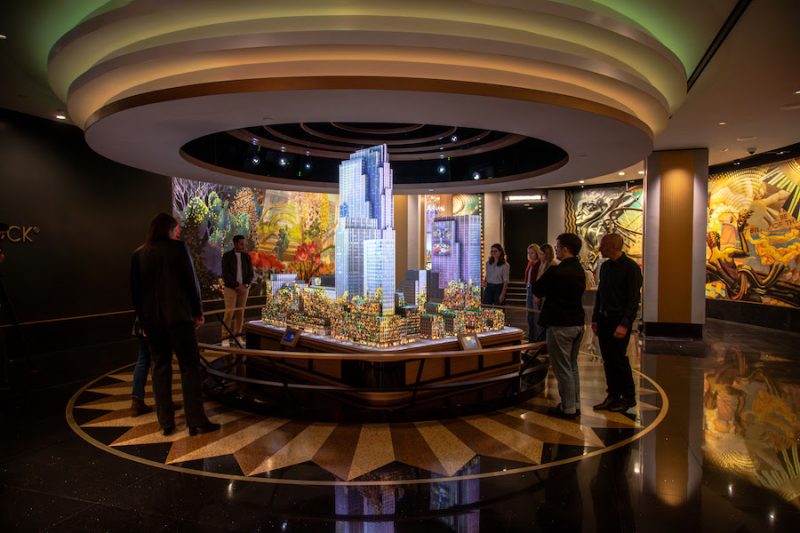
Disguise has powered a new video projection show and multimedia theater experience for Top of the Rock’s immersive welcome experience.
Luminous XR Launches No-Code XR Content Creation Tool
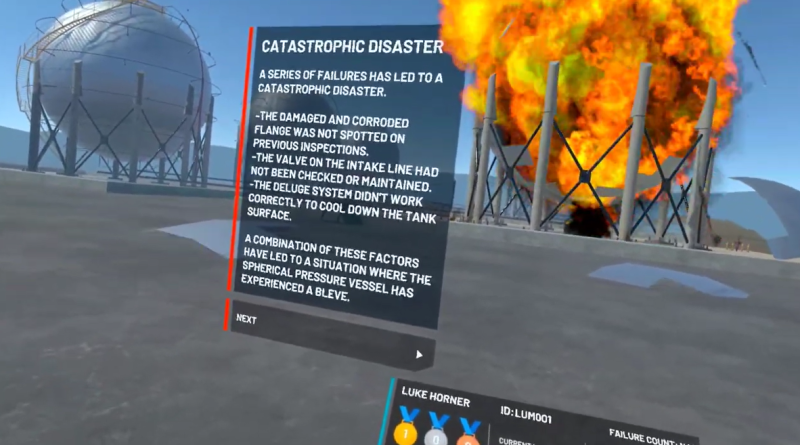
FLOW by Luminous XR provides creators with a way of creating VR/AR/MR, metaverse-style immersive training content without the need to code.
Sony’s Beyond Sports Technology Powers Monday Night Football

Sony will produce The Simpsons Funday Football, a real-time animated alternate presentation of a Monday Night Football game on Dec. 9.
